Presence
Guide
Be a steady presence. Listen before directing, share knowledge with care, and encourage young people to think, choose, and lead.
Make time. Keep your word. Learn alongside.
A foundation for shared responsibility
Keepers of the Obligation is an Indigenous male-led organization rooted in responsibility, behavioral intervention, and violence prevention. The framework approaches sacred responsibility through distinct lenses shaped by each community’s knowledge and needs.
Explore the commitments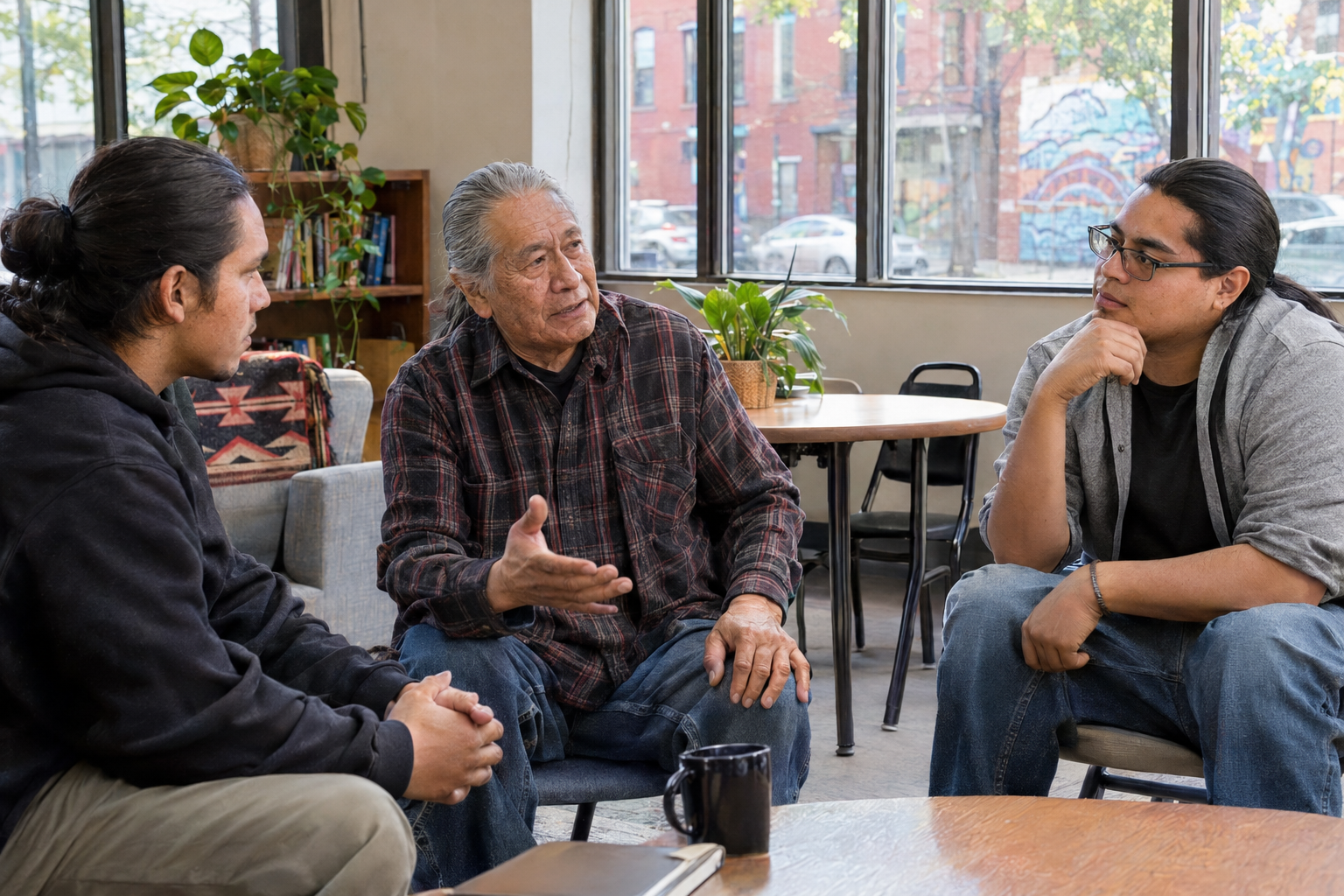
 THE WORK IS SHARED
These commitments offer a starting structure. Their meaning should be shaped with the people and communities who will carry them.
Presence
Be a steady presence. Listen before directing, share knowledge with care, and encourage young people to think, choose, and lead.
Make time. Keep your word. Learn alongside.
Responsibility
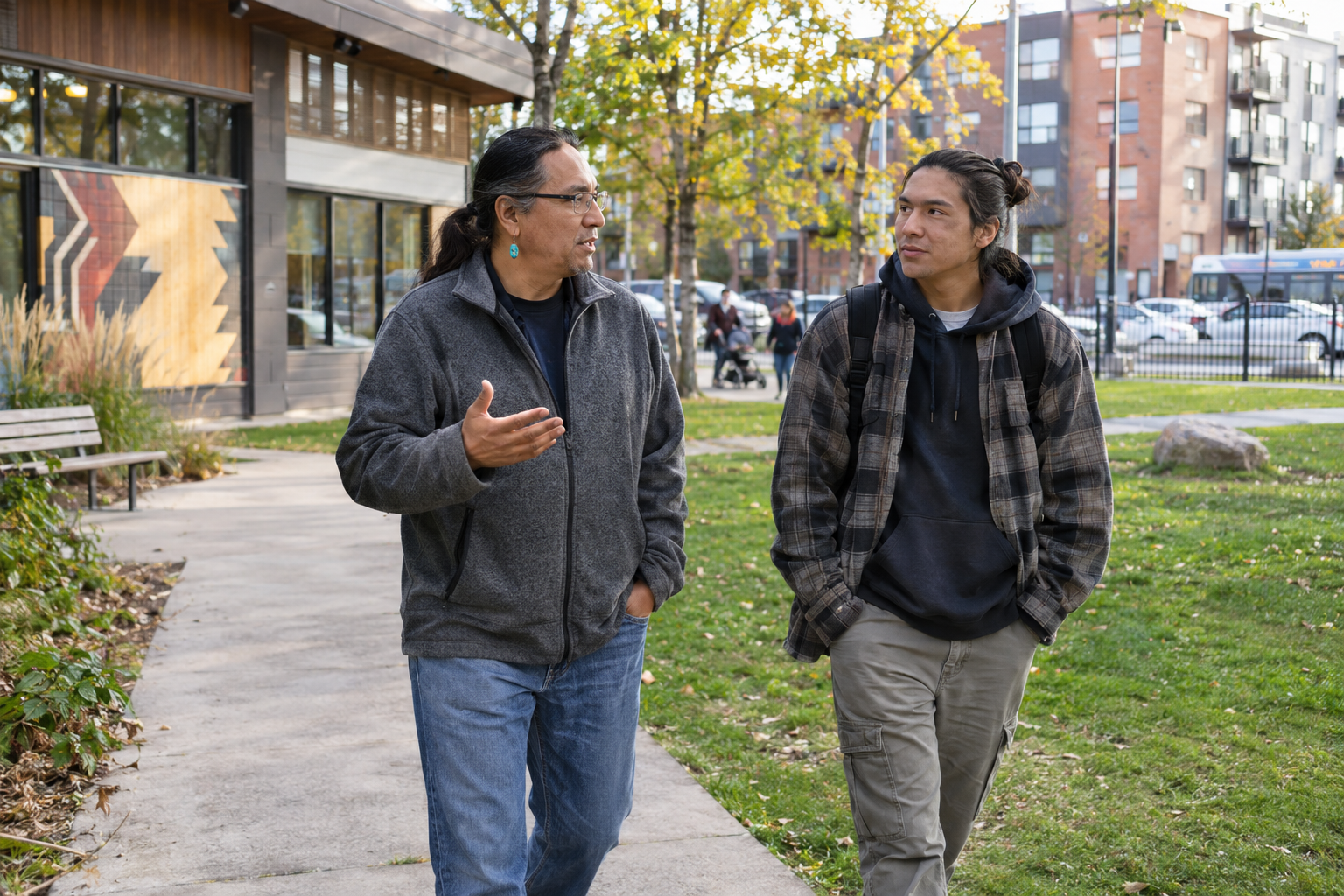
Help create the conditions for young people to feel valued, supported, and connected to a wider circle of responsibility.
Stand with. Set boundaries. Show care.
More than 70% of American Indian and Alaska Native people live in urban areas. Urban does not mean disconnected from Nation, culture, or community. Yet Native youth can be a minority within a minority, while services and funding are often organized around reservation communities. Young people may also navigate housing insecurity, discrimination in schools, and risks connected to trafficking and the crisis of missing and murdered Indigenous people and women (MMIP/MMIW). Their resilience, knowledge, and leadership belong at the center of every response.
Safety includes physical security, cultural connection, and the sense that you belong. Relationships with heritage, language, and traditions can strengthen identity and support well-being. Friendship centers, urban Indian clinics, and other Native-led community spaces can become new campfires: places to gather, find trusted support, and build connection. Because urban Native communities bring together many Nations, programs should be inclusive and guided by local people.
Care should recognize how boarding schools, forced relocation, and ongoing systems of erasure shape present-day experiences. Support can address physical, mental, emotional, and spiritual well-being. Where a community chooses it, a Medicine Wheel approach may offer one way to think about that balance; no single teaching represents every Nation. In schools and community spaces, restorative practices and mental health support can respond to harm without defaulting to punishment or criminalization.
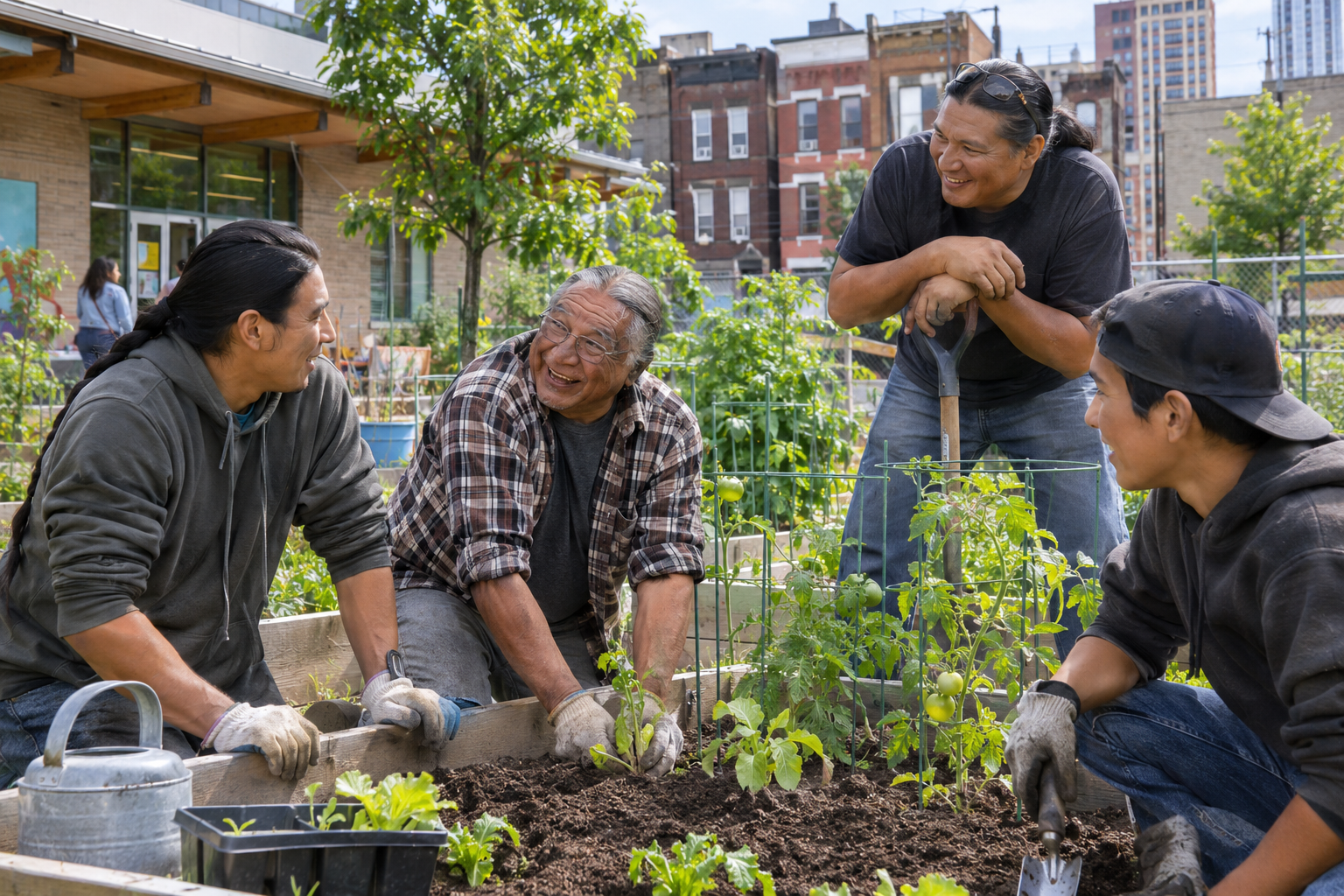
Youth councils and peer mentorship give young people a voice and let older youth guide younger ones through urban life. Schools, child welfare systems, and city agencies can build cultural humility with local Native leaders and work in partnership with them. Youth centers and community gardens can offer welcoming places to gather, designed with young people and free from unnecessary surveillance.
Invite young people to shape programs and safety plans, and make room for their perspectives in decisions that affect them. A strengths-based approach honors their adaptability and leadership while respecting the distinct cultures and protocols of each Nation.
Continuity
Honor the people who hold community knowledge and support the relationships through which it can reach the next generation.
Ask permission. Give credit. Keep learning.
Rooted locally
The Missing and Murdered Indigenous People crisis is deeply intertwined with domestic violence, human trafficking, and systemic gaps. The framework approaches sacred responsibility through accountable relationships and community-led practice, while respecting local knowledge, language, and protocols.
Talk about the frameworkRelationship is the beginning